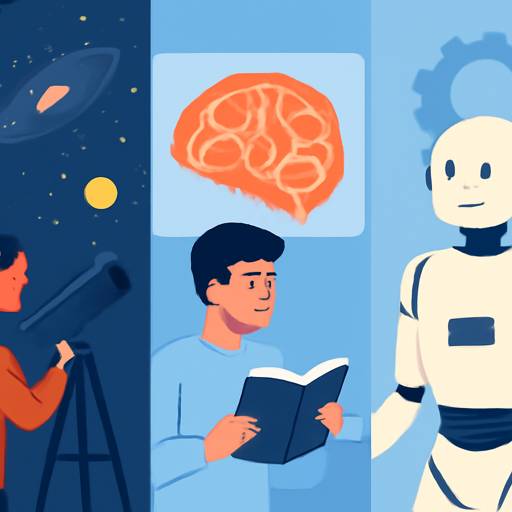
Astronomy Research Ideas and Space Telescope Projects You Can Start Today
Big science is closer than it seems. With the right approach, students can turn curiosity into publishable discoveries using backyard telescopes, open datasets, and collaborative platforms. Begin by framing specific, testable questions. For instance, investigate how light pollution affects limiting magnitude in your area by logging star counts nightly and correlating them with sky quality meter readings. This creates a grounded entry point into astronomy research ideas while teaching data hygiene, error bars, and reproducibility.
Exoplanet transit photometry is a classic stepping stone. A modest telescope, a stable equatorial mount, and a CCD or CMOS camera let you capture the slight brightness dip as a planet crosses its star. Use differential photometry with comparison stars, calibrate darks/flats, and generate a light curve in software like AstroImageJ. Submit results to community databases for validation. Variable star monitoring, asteroid light curves, and supernova follow-up are similarly accessible, turning your backyard into an observatory that contributes to global campaigns.
For students without optical gear, data-mining archives opens the door to professional-grade research. The Mikulski Archive for Space Telescope Projects (MAST) hosts Hubble and TESS data ripe for reanalysis. Explore Gaia DR3 to study stellar kinematics or cluster memberships; use Sloan Digital Sky Survey spectra to classify galaxies; or analyze TESS light curves to search for overlooked periodicities with periodograms and machine learning classifiers. Building pipelines in Python (Astropy, Lightkurve, SciPy) strengthens computational literacy while yielding original results.
Spectroscopy enhances depth. A low-cost transmission grating mounted on a DSLR can resolve bright star spectra. Measure Balmer lines, estimate surface temperature, and compare with catalog values to validate methods. Radio astronomy adds another dimension: a software-defined radio (SDR) dongle and a simple antenna allow detection of the hydrogen line at 1420 MHz, enabling velocity measurements of neutral hydrogen clouds and mapping local galactic rotation. Document setup, calibration, and uncertainty budgets carefully; rigorous methodology is as crucial as the signal itself.
Finally, embrace community science. Platforms like Zooniverse host transient identification and gravitational lens hunts where pattern recognition matters. Join multi-instrument campaigns coordinated on forums and preprint servers, develop an observing proposal targeting a specific target of opportunity, and practice scientific writing. With intentional project design and disciplined analysis, students can transform curiosity into contributions that matter.
Cognitive Science for High School: Designing Experiments That Reveal the Mind
Understanding how brains transform information is a perfect gateway for students to learn experimental design, statistics, and ethical research. A strong starting point is to formulate a narrow hypothesis, operationalize variables, and pre-register methods to prevent hindsight bias. A study on attention might hypothesize that smartphone notifications increase reaction times in a sustained attention task. Define your dependent measure (mean reaction time), control confounds (quiet room, fixed device), and counterbalance trial orders to reduce sequence effects. This turns qualitative curiosity into quantitative, testable science tailored for cognitive science for high school settings.
Classic paradigms are both robust and approachable. The Stroop task probes cognitive control by measuring the interference effect between word meaning and ink color. The attentional blink paradigm reveals limits in temporal attention by asking participants to detect a second target in rapid serial visual presentation. Working memory experiments test the capacity and decay of information, while psychophysics probes perception thresholds using just-noticeable differences and staircase procedures. These tasks can be implemented with PsychoPy, jsPsych (for web-based experiments), or even spreadsheet-timed trials when resources are limited, as long as timing accuracy and data integrity are addressed.
Analysis is where insights crystallize. Use open-source tools like JASP or Jamovi to run t-tests, ANOVA, and compute effect sizes with confidence intervals. For signal detection problems (e.g., recognition memory), calculate sensitivity (d′) and criterion to separate perceptual sensitivity from response bias. Encourage power analyses before data collection to ensure your sample can detect the anticipated effect. Visualize with raincloud plots or violin plots to communicate distributional patterns beyond means and standard errors.
Ethics must be front and center. Obtain informed consent, anonymize data, and avoid sensitive topics without proper oversight. Discuss the limits of generalization and potential replication challenges. Encourage replications of classic findings to deepen understanding of variability in effect sizes. For advanced projects, mine open datasets such as OpenNeuro or the Child Mind Institute’s ADHD-200 to explore reproducible pipelines in Python (MNE, Nilearn) or R, practicing pre-processing, feature extraction, and cross-validation. The real win is cultivating scientific habits—transparent reporting, version-controlled code, and sharable datasets—so projects contribute meaningfully to an open science ecosystem.
Humanoid and Swarm Robotics: Hands-On Builds, Algorithms, and Case Studies
Robotics lets ideas move in the real world, and student-friendly designs can be both affordable and ambitious. A bipedal platform for humanoid robotics for students can be built with micro servos, an ESP32 or Arduino, and 3D-printed frames. Start with a statically stable gait: precompute center-of-mass projection within the support polygon, then expand toward dynamic walking with simple zero-moment point heuristics. An IMU supplies tilt data for closed-loop corrections; a basic proportional-derivative controller can stabilize pitch and roll. For manipulation, a two-DOF arm with gripper teaches forward/inverse kinematics, workspace constraints, and trajectory smoothing (e.g., minimum-jerk profiles) without overwhelming complexity.
Perception and autonomy elevate capability. Vision can begin with a monochrome camera and AprilTag detection for reliable localization, then progress to lightweight CNNs (MobileNet or YOLO-Nano) on edge accelerators. Voice control via keyword spotting is feasible with tinyML models. For high school learners, a continuous integration pipeline that simulates in PyBullet or Webots and deploys to hardware via ROS 2 bridges software and hardware disciplines. Safety is non-negotiable: include soft end-stops, current limits, and an easily accessible kill switch to ensure safe testing cycles.
Cooperative autonomy is where Swarm robotics student projects shine. Start with two to four differential-drive bots using microcontrollers, IR or BLE communication, and range sensors. Implement flocking with Reynolds Boids rules (separation, alignment, cohesion) to introduce decentralized control. Progress to consensus algorithms—push-sum averaging or majority voting—for distributed decision-making, and integrate potential fields for obstacle avoidance. Formation control can be achieved with local bearing-only strategies, demonstrating how global patterns emerge from local rules. Mapping tasks showcase scalability: assign each robot a frontier region in an occupancy grid; merge maps via pairwise pose graph optimization to highlight multi-robot SLAM advantages over single-agent exploration.
Real-world connections anchor learning. A warehouse “picker” swarm can autonomously allocate items to robots using market-based task assignment, reducing travel time. In disaster response scenarios, a heterogeneous swarm—ground bots for mapping, aerial drones for thermal imaging—illustrates sensor fusion and robust communication under constraints. A case study for a school demonstration might stage an environmental cleanup: robots detect colored “waste,” negotiate task divisions with distributed auctions, and deliver payloads to bins, showcasing reliability, efficiency, and resilience to single-robot failure. For structured mentorships and project scaffolding, explore opportunities like Swarm robotics student projects to connect designs with curated curricula and community showcases, turning prototypes into polished demonstrations ready for fairs or publications.