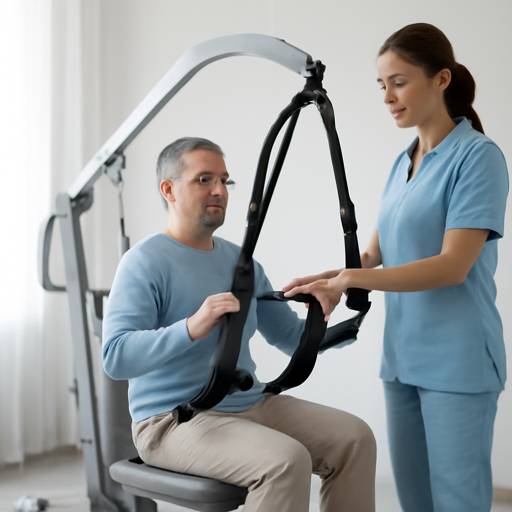
In modern healthcare and home care settings, the ability to transfer a patient safely from a seated position to standing is one of the most frequent and physically demanding tasks. Manual transfers place immense strain on caregivers’ backs, shoulders, and knees, often leading to chronic injury. The power sit to stand lift has emerged as a revolutionary tool that bridges the gap between full dependence and independent mobility. Unlike ceiling lifts or full-body sling lifts, these devices are designed for patients who can bear weight on one or both legs and possess some trunk stability. By providing a sturdy frame, a padded knee block, and a motorized lifting mechanism, the power sit to stand lift allows caregivers to assist a patient into a standing position with minimal physical exertion. The result is a transfer that is safer, more dignified, and more efficient than manual techniques. For patients recovering from surgery, living with neuromuscular conditions, or experiencing age-related weakness, these lifts restore a sense of autonomy. The powered version adds an extra layer of convenience: smooth, controlled movement at the push of a button. This article explores the mechanics, clinical benefits, and real-world applications of this essential patient handling device.
How a Power Sit to Stand Lift Works and Why It Matters
At its core, a power sit to stand lift operates on a simple yet effective principle: the patient sits at the edge of a bed or chair, places their feet on a stable base, and leans forward as the lift’s sling or vest supports their torso. The caregiver positions the lift so that the knee block rests against the patient’s knees to prevent forward sliding. When the motor is activated, the lift arm raises the patient’s upper body into a standing position. The powered mechanism ensures a smooth, gradual ascent that avoids jerking or sudden changes in posture. This is critical for patients with compromised balance, osteoporosis, or joint replacements, where abrupt movement could cause pain or injury. The caregiver’s role shifts from a physical lifter to a patient supervisor—guiding the lift’s path and ensuring the patient feels secure. Many models feature a battery-powered actuator that eliminates the need for manual pumping, a common headache in older hydraulic lifts. The result is a transfer that takes seconds rather than minutes and requires far less exertion from the caregiver. For facilities like hospitals, nursing homes, and rehabilitation centers, this translates to reduced worker’s compensation claims and less staff turnover. For in-home caregivers, it means the ability to care for a loved one without sacrificing their own physical health. The power sit to stand lift is not just a tool; it is a cornerstone of modern safe patient handling programs. When selecting a device, it is essential to consider weight capacity, base width, and adjustability of the knee pad and footplate. A well-chosen lift accommodates a wide range of patient heights and sizes. Additionally, many units now include digital displays and remote controls, further simplifying operation. The technology behind these lifts continues to evolve, with newer models offering quieter motors, longer battery life, and more intuitive design. For any caregiver who regularly performs standing transfers, investing in a power sit to stand lift can dramatically improve daily workflow. It reduces the risk of patient falls during transfer, which are a leading cause of hospital-acquired injuries. Moreover, the lift encourages the patient to participate actively in the movement, engaging their leg and core muscles. This active involvement supports rehabilitation goals and helps maintain muscle tone, which is especially important for those recovering from stroke or hip surgery. The powered version specifically addresses the fatigue that manual lifts impose on caregivers, making it possible to perform multiple transfers in a day without exhaustion.
Clinical Benefits for Patients and Caregivers
The clinical advantages of using a power sit to stand lift extend far beyond convenience. For patients, the primary benefit is enhanced safety during transfers. Falls during manual standing attempts are a major cause of fractures, head injuries, and hospital readmissions among the elderly and disabled. The lift provides a stable pivot point and prevents the patient from toppling forward or sideways. The knee block acts as a mechanical stop, while the vest or sling distributes lifting force across the torso rather than concentrating it on the underarms. This is particularly important for patients with fragile skin, contractures, or recent surgical incisions. The lift also reduces the risk of shoulder dislocation or nerve compression that can occur when caregivers pull on a patient’s arms during a manual transfer. For caregivers, the most significant impact is on musculoskeletal health. Studies indicate that nurses and nursing aides who perform frequent manual transfers have a lifetime prevalence of low back pain exceeding 80%. The use of a power sit to stand lift can reduce the physical load on the caregiver’s spine by up to 90% compared to manual lifting. This is because the lift’s motor does the heavy work, while the caregiver only guides and monitors. Additionally, the lift encourages caregivers to use proper body mechanics even when assisting, reinforcing safe habits. The psychological benefits are equally important: caregivers report lower stress levels and greater job satisfaction when they have access to powered lifting equipment. They no longer dread the transfer process, which often causes anxiety for both parties. From a rehabilitation perspective, the power sit to stand lift facilitates early mobilization. Patients who can be stood safely and comfortably are more likely to participate in physical therapy sessions that improve gait, balance, and endurance. The lift can be used to transition from bed to commode, creating a pathway toward independent toileting—a key milestone for dignity. In long-term care settings, regular use of sit-to-stand lifts has been associated with a reduction in pressure ulcers, because patients are repositioned more frequently. The device also supports bariatric patients, with many models offering weight capacities of 400 to 600 pounds. Real-world case studies from rehabilitation hospitals show that implementing a power sit to stand lift program reduced staff injury rates by over 40% within the first year. For example, a 150-bed skilled nursing facility in Ohio replaced all manual transfer protocols with powered sit-to-stand lifts. They reported a 60% drop in lost workdays due to injury and a measurable improvement in patient fall rates. The interdisciplinary team—including nurses, physical therapists, and occupational therapists—agreed that the lifts streamlined daily routines and allowed more time for direct patient care. Another example from a home health agency in Florida demonstrated that family caregivers using a power lift could safely transfer a loved one with progressive multiple sclerosis for over two years without experiencing caregiver burnout or injury. This longevity in caregiving is a testament to the device’s ergonomic design. In essence, the power sit to stand lift is not merely a transfer aid; it is a preventive health tool that protects both patient and caregiver from avoidable harm.
Real-World Applications and Sub-Topics: Choosing the Right Lift
Selecting the appropriate power sit to stand lift involves understanding the specific needs of the patient, the care environment, and the frequency of use. For home care, portability is a key factor. Many home users prefer lifts with foldable frames, detachable slings, and batteries that hold a charge for multiple transfers. A typical home model weighs between 50 and 80 pounds and can be stored in a closet when not in use. For institutional settings, durability and ease of cleaning are paramount. Hospital-grade lifts often feature heavy-duty casters, sealed motors, and washable slings that can withstand frequent disinfection. A sub-topic worth exploring is the difference between passive and active sit-to-stand lifts. Passive lifts require the patient to do minimal work—the lift does all the raising. Active lifts, on the other hand, encourage the patient to push through their legs while the lift provides stability. Many power sit to stand lifts offer a hybrid approach: the motor helps the patient rise, but the patient must engage their muscles to match the lift’s speed. This is ideal for rehabilitation because it provides just the right amount of assistance. Another important consideration is the type of sling or vest. Some patients prefer a vest-style harness that wraps around the torso, especially those with poor trunk control. Others may find a sling that goes under the arms more comfortable. Caregivers should test different options and note any areas of pressure or discomfort. Case studies from outpatient physical therapy clinics reveal that patients with hip replacement surgery who used a power sit to stand lift for the first two weeks post-op achieved independent standing an average of three days earlier than those transferred manually. The lift allowed them to bear weight without fear, while the therapist controlled the rate of rise. In another example, a spinal cord injury rehabilitation center in California integrated the lift into their daily transfer training for patients with incomplete injuries. They found that the power assist helped patients build confidence and reduced the number of assistive personnel needed for each transfer from two to one. The lift also served as a training tool for patients to learn how to shift their weight and use their arms for balance. For caregivers, one less-documented benefit is the reduction of workplace stress. Nurses who previously dreaded the three-person lift for heavy patients now manage the same transfer solo with a power lift. This not only improves efficiency but also fosters a culture of safety. The financial aspect cannot be ignored: while a power sit to stand lift requires an upfront investment (typically $2,000 to $6,000), the long-term savings in injury claims, staff turnover, and patient complications often justify the cost. Many insurance plans, including Medicare Part B (under durable medical equipment), may cover the lift if prescribed by a physician and deemed medically necessary. Understanding these real-world applications helps caregivers and administrators make informed decisions that improve outcomes for everyone involved.